

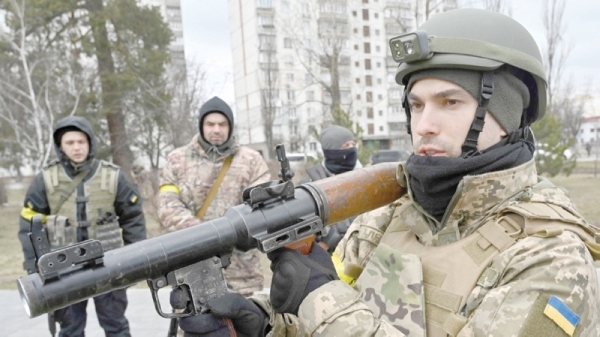
WASHINGTON/LVIV: A US ban on imports of Russia’s oil ratcheted up punishment for the attack on Ukraine on Tuesday as McDonald’s and Starbucks closed outlets and Moscow promised safe passage for some people to flee.
As the number of refugees created by the biggest assault on a European country since World War Two surpassed 2 million, several of the most internationally famous brands added to the Kremlin’s global isolation on the 13th day of the incursion.
McDonald’s, a symbol of capitalism that opened in Russia as the Soviet Union fell, and coffeehouse chain Starbucks will temporarily close stores, while Pepsi will stop selling its soft drink brands and Coca-Cola is halting business in the country.
Washington, meanwhile, imposed an immediate ban on imports of Russian energy, sparking a further increase in the oil price, which rose around 4 per cent on Tuesday. Prices have surged more than 30 per cent since Russia’s incursion began on February 24.
Russia – the world’s second-largest exporter of crude – has warned the cost will skyrocket further if the West implements bans.
Despite the prospect of higher household bills, US President Joe Biden said President Vladimir Putin needed to face consequences for the assault.
“The American people will deal another powerful blow to Putin’s war machine,” he said.
The Kremlin describes its actions as a “special operation” to disarm Ukraine and unseat leaders it calls neo-Nazis.
Ukraine and Western allies call this a baseless pretext for an attack that has raised fears of wider conflict in Europe and could deal a further hit to the world economy as it tries to recover from the coronavirus pandemic.
Civilians fled the besieged city of Sumy on Tuesday in the first successful “humanitarian corridor” opened since Russia’s attack but Ukraine accused Russian forces of shelling another evacuation route, from Mariupol in the south of the country.
Talks between Kyiv and Moscow over safe passage have previously failed, with Ukraine opposing routes out of the country to Russia or its ally Belarus.
Moscow is ready to provide humanitarian corridors so people can leave capital Kyiv and four other cities – Chernihiv, Sumy, Kharkiv and Mariupol – on Wednesday, Mikhail Mizintsev, head of Russia’s National Defence Control Centre, was quoted as saying by the Tass news agency.
“In order to ensure the safety of civilians and foreign citizens, Russia will observe a regime of silence from 10 am Moscow time on March 9 and is ready to provide humanitarian corridors,” he said. It was unclear if the proposed routes would pass through Russia or Belarus.
Ukrainian President Volodymyr Zelenskiy renewed calls on Tuesday for no-fly zones, something the West has rejected for fears of escalating the conflict. The United States turned down a surprise Polish offer to transfer MiG-29 fighter jets to a US base in Germany to help replenish Ukraine’s air force.
The prospect of flying combat aircraft from Nato territory into the war zone “raises serious concerns for the entire Nato alliance,” the Pentagon said. Instead, the West has focussed its pressure on sanctions, mainly on individuals and financial institutions. Up until now, oil and natural gas had been excluded.
The United States is not a leading buyer of Russian oil and Europeans, who are far more reliant on it, have been reluctant to follow suit.
Britain, however, said it would also phase out the import of Russian oil and oil products by the end of 2022, while the EU published plans to cut its reliance on Russian gas by two thirds this year.
Vyacheslav Volodin, chairman of Russia’s State Duma lower house of parliament, said the measures would hurt Europe while helping the United States. – Reuters