


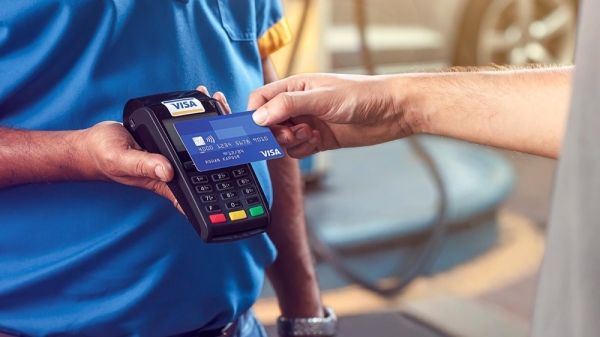
Muscat: The Ministry of Commerce, Industry, and Investment Promotion (MOCIIP) has made it mandatory to provide electronic payment services to customers in eight business activities, which include the sale of gold, silver and foodstuffs.
The activities for which the electronic payment service is required.
- Sale of foodstuffs.
- Sale of Gold and silverware.
- Restaurant and café activities.
- Sale of vegetables and fruits.
- Sale of electronics.
- Sale of building materials.
- Sale of Tobacco.
- All activities in the industrial zones, complexes, commercial centers, and gift markets.
Article one states institutions and commercial companies operating in the select activities must provide electronic payment services to all consumers.
Article two states that the in violation of the provisions of this decision, the ministry may impose any of the following administrative penalties:
1 – Warning, obligating the violator to provide the electronic payment service within a period not exceeding 20 days.
2 – An administrative fine of RO100.
Article 3 states the decision shall be published in the Official Gazette and shall come into force after 30 days from the date of its publication.
The decision is based on the provision of electronic payment services to consumers as per the Commercial Law promulgated by Royal Decree 55/90, Commercial Companies Law promulgated by Royal Decree 18/2019, and the Royal Decree 97 / 2020 amending the name of the Ministry of Commerce and Industry to the Ministry of Commerce and Industry and investment promotion.
In a statement issued last year, the ministry made the electronic payment option mandatory in commercial activities starting from January 1, 2022.
The Central Bank of Oman, in coordination with banks and service providers, has provided point-of-sale devices to merchants without installation fees or monthly or annual fees to private sector institutions. Only fees for merchant transactions specified by CBO will be applicable.
The fees must not exceed 15 percent of the transaction amount or a maximum of RO10 for payment via debit cards or exceed 0.75% for mobile payments via QR code. The Consumer Protection Authority, in coordination with banks, will receive complaints related to electronic payments through the authority’s communication channels.
Establishments will be required to place a notice stating the availability of an electronic payment facility.