


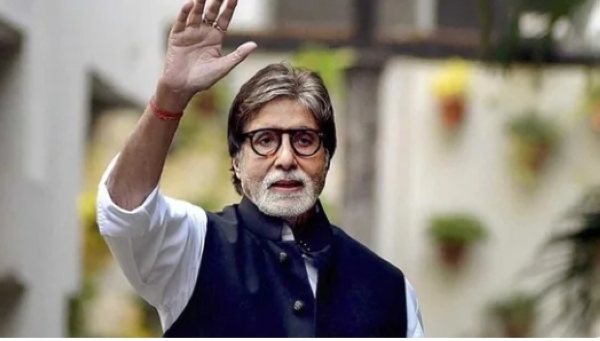
Most moviegoers would have learned of the arrival of Amitabh Bachchan when producer-director Praksha Mehra’s film Zanjeer hit the screens.
The story and dialogue were by the Salim-Javed duo, who were charting a path to success with “Andaz”, “Adhikar”, “Seeta Aur Geeta”, and “Haathi Mere Saathi” to their credit. Probably, not big names enough to lure the veterans who were offered the film, to accept it. The film fell into the lap of a struggling newcomer, Amitabh Bachchan. “Zanjeer”, when released, went on to become a box office blockbuster.
That established Amitabh Bachchan as a star and, the media gave him the title of the angry young man. It established Prakash Mehra as a director to reckon with and Salim Javed’s name became known even outside the film industry.
But, the film’s journey to the silver screen was not easy because there were no takers for the film.
No distributor was willing to risk a new actor who had a few flops behind him, already. The producer had to make compromises and sell it to the Bombay circuit distributor at Rs four lakh on an outright basis which meant if the film worked, the distributor kept it all.
Bachchan had featured in a couple of successful films after a line-up of flops. Anand was one but, it was a Rajesh Khanna film. Bombay To Goa, but was a film by Mehmood, the legendary comedian, producer, and director. Abhimaan followed the success of Zanjeer but, it was still, a Jaya Bhaduri film. So far, all he had to his credit was Saat Hindustani and a bit role in Sunil Dutt’s Reshma Aur Shera, besides a few flops like Parwana, Raaste Kaa Pathtar, Badhe Haath, etc. However, the films that followed, Sholay and Deewaar cemented his place.
Despite “Zanjeer”, the reigning superstar was still Rajesh Khanna. That was till, “Namak Haraam” was released, a film where Rajesh Khanna and Amitabh Bachchan played inseparable friends but, were actually pitted against each other. Here, Bachchan played a benevolent friend but, at the end of the movie, he got to put his newly acquired angry young man image on display and it became his film. It was an author-backed role for him.
Amitabh Bachchan had arrived. The Rajesh Khanna era of romance was over. Films like “Dost”, “Roti Kapada Aur Makaan”, “Kasauti”, and “Majboor” kept him consolidating his place. The audience had accepted him. The year 1975 accounted for three Bachchan hits “Deewaar”, “Chupke Chupke”, and “Sholay”.
In the years that followed, Bachchan kept giving an intermittent hit or two. A flop once in a while did not affect his career. If a film was due for release, posters were put up all over and that was that.
There was no concept of marketing and promotion like it is now. The mainstream media did not even bother with film schedules. And, yet, when a Bachchan film was released, the exhibitors made a beeline for the distributor’s office. All cinema owners wanted a Bachchan film, also all cinemas wanted to make sure the film did not go to the competing cinema in the same town.
In the circuit of CP (Central Province) and UP, a new film opened on a Thursday (as against Friday in the rest of the country). Here, the first show opened at 6 in the morning. Whatever the new Bachchan release, the report read the same: Every film buff wanted to be the first one to watch his film. That was the craze.
Amitabh Bachchan was given various titles like megastar and so on. But, the film trade, which never gave titles, also relented and called him “The One Horse Race” and, even further, “A One Man Industry”.
This was the era when glossy gossip magazines were popular. And, for whatever reason, Bachchan avoided them as well as the other media. He lived like a recluse in an industry where showmanship and overstating were the norms. No media had excess to him. I think that created a kind of extra mysticism about him and helped propel his career.
It was in 1982, when Bachchan met with an accident while shooting for Manmohan Desai’s film, “Coolie”. He was on his deathbed. He was never in contact with his audience or the fans so far. But, all of India was praying for him while he was lying unconscious, fighting with, his seemingly, inevitable death. But, the fans he was never aware of, in fact, all of India praying for his recovery.
Temples, Churches, and mosques were where the people flocked to pray for him. It worked. Amitabh Bachchan had fought death. He emerged from his injury with a status bigger than ever before. He was the people’s man. Not because of his films, but as an individual. The persona that he had built over the years with his line-up of successful films entertained the masses. Over a period, he regained his health and was back working. For posterity, Manmohan Desai froze the scene where Bachchan was hurt in the film.
Then, there comes a time when age catches up. Bachchan gracefully accepted character roles. In Padmalaya Studio’s “Sooryavansham”, he played both father and son. But, with “Mohabbattein”, his phase as the character actor began and he has been going on ever since. He, probably, will end up setting a record for doing more films in his later years than he did earlier. Even now, he has 10 films at various stages of production.
Thing is, every filmmaker wants to work with Bachchan at least once! While Manmohan Desai and other makers assigned him action roles, Bachchan had also been loved in “Silsila”, “Kabhi Kabhie”, “Chupkke Chupke”, “Mili”, “Do Anjaane”, which were either love stories or ones where the action was incidental.
Amitabh Bachchan was also lured into politics by his friend, the then Prime Minister, Rajiv Gandhi. He fought general elections from his hometown, Allahabad, and won by defeating local heavyweight, H.N. Bahuguna, by a huge margin. Realizing that he was not cut out for politics, he gave up on it.
Today, Amitabh Bachchan also promotes dozens of consumer products as a brand ambassador. But, along with these commercial assignments, he also helps promote any and every government program with a cause whenever asked to. And, that he does free of charge as his duty to the nation and to the people.
Amitabh Bachchan made a major wrong decision in his life when he was convinced, probably, by a financial guru, that the name, Amitabh Bachchan, had become a brand with equity value. Amitabh Bachchan Corporation Ltd (ABCL) was launched with future plans to go public and raise more money. After all, once a film man, always a film man. With ABCL, he could always make films that he wanted to and get into other activities related to the entertainment business.
ABCL got into film production successfully with its first release, “Tere Mere Sapne”. Got into beauty pageants, talent hunts, and so on. Rather too much to control at one time. The problem was that the company had no insider from the film industry managing it, it was overstaffed with overpaid employees and had rented a high-end locality, Juhu, hotel (in Mumbai) in its entirety as its office. It had yet to start making money before it started spending this way. The venture was a disaster faced with bankruptcy proceedings.
Amitabh Bachchan managed to avoid bankruptcy.
This was what we Indians justify as a bad phase. Looked like Bachchan had just gotten over it. Because, soon, his new phase was taking off with the television show, “Kaun Banega Crorepati” (KBC), followed by a flood of offers for films and endorsements. He adjusted to working with the new and younger generation and, it did not seem to matter if the film had commercial potential or not. The films he did were totally in contrast to films that made him the megastar in the 1970 and 80s.
Films like “Cheeni Kum”, “Pink”, “Piku”, “Pa” were nothing like what you would imagine Bachchan doing! But, he carried off most of them with elan. Amitabh Bachchan celebrates the eighth decade of his life of which almost 55 devoted to the entertainment industry.
He has been a singer, performed stage shows in various countries, a comedian, a villain, a father, grandfather all that on screen. Yet, you can’t mold him in an image anymore. He is beyond that. And, if one has seen him during the 1970s, a man, keeping his distance from the rest of the film industry, fellow stars, socializing, and media limelight, this today is not the same Amitabh Bachchan. He is now a people man.
Bachchan’s new persona emerged post his 1982 near-fatal injury. He opened up to all. The media (I happened to be the first one to interview him), and the fans (as he appeared at the gate of his bungalow to greet hundreds of fans and well-wishers who gathered there every evening. (this ritual became once a week, later on). He even started communicating with his followers through a blog (he called them the extended family). This was an all-new Amitabh Bachchan. Bachchan when you watch the KBC program on TV emerges as more human than anybody else. A caring host, offers a glass of water to a contestant, offers face tissues, and even wipes the tears of a nervous contestant. His banter with them is usually delightfully witty.
What has he not seen or been through? Struggle to get into films, success like no one has ever seen, an accident that almost spelled the end for him, foray into politics and disillusionment, and financial disaster. Then leaving it all behind to bounce back with ever more riches, fame, and adulation from the masses.
But, Bachchan had arrived. Like no other star had. He went on to consolidate his grips so much that other stars had to agree to play second and third fiddle in his films.
