

Majority state-owned Petroleum Development Oman (PDO) – the nation’s biggest producer of oil and gas – is bracing for an upsurge in the generation of ‘produced water’ – a phenomenon once seen as the bane of oilfield operations, but is today increasingly viewed as a potentially valuable resource that can be suitably harnessed for desert agriculture, reservoir stimulation, and construction and industrial applications.
Produced water is typically referred to as naturally occurring water that is extracted from the subsurface along with oil and gas. But unlike potable or other types of surface or groundwater, produced water must be suitably and safely disposed of because it is contaminated with hydrocarbons, hydrogen sulphide (H2S) and potentially toxic heavy metals as well. Consequently, it must be either treated if used for oilfield or industrial consumption, or disposed of in deep aquifers – options that are energy-intensive given the copious volumes involved.
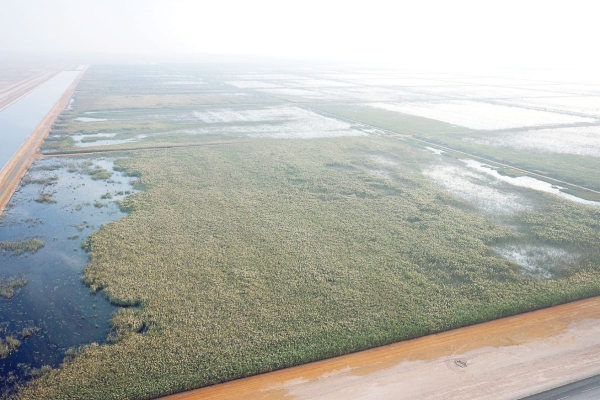
According to PDO, produced water output currently averaging a staggering 1 million m3/day, is set to surpass 1.1 million m3/day from 2022 onwards. While roughly 70 per cent of this output is reused for reservoir pressure maintenance, as well as Chemical Enhanced Oil Recovery (EOR) operations, the remainder is sent to massive reed beds developed in the desert (15 per cent), as well as for deep disposal (15 per cent).
“We continue to seek alternative methodologies for the treatment, reuse and disposal of produced water in a manner that consumes far less energy,” PDO said in its latest Sustainability Report 2022.
“Our underlying premise is to manage water as a valuable resource rather than a nuisance and pursue alternatives for maximising produced water use where technically and economically feasible. In the North, where salinity levels are very high, there is a potential for salt making. However, in the South, where water salinity is low, the water could be used in agriculture. Other reuse opportunities include drilling, brick making, site preparation works and road construction,” the energy company stated.
Plans are also underway to reduce volumes currently being disposed of through deep aquifer disposal – a costly, energy intensive process. Replicating its success in the development of Reed Beds at Nimr in the south of its concession, PDO now aims to phase out deepwater disposal at its Marmul Cluster through the deployment of reed bed technology.
The company’s award-winning Nimr Water Treatment Plant uses temperature resilient, salinity resistant reed plants to remove contaminants from produced water – a process that cuts CO2 emissions and enables the use of some of the treated water for biosaline agriculture.
Around 15 per cent of PDO’s total produced water output is currently channeled into the Reed Water Bed project at Nimr, resulting in the greening of a 10 sq kilometre swathe of the desert. Several hundreds of barrels of oil have also been recovered from the produced water. Energy savings as a result of the use of reed bed technology amounts to 68.7 gigawatt-hours per year, with savings in natural gas averaging about 21.5 million cubic metres per year, according to PDO.