

Russian President Vladimir Putin’s war on Ukraine seems to have awakened Germany from its post-Cold War slumber, with a dramatic shift in foreign and defence policy indicating a newfound recognition of Russia’s unreliability as a partner and the broader security challenges Europe faces. But can Germany’s tougher approach withstand a painful and protracted crisis, or will accommodationist voices regain traction, urging acceptance of the realities on the ground?
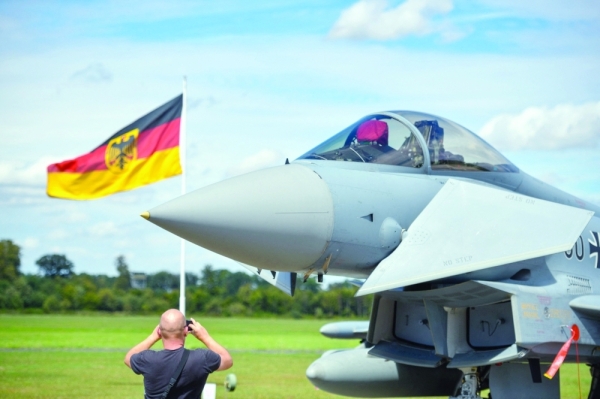
There is no doubting the resoluteness of Germany’s response to the Russian invasion. Beyond halting the Nord Stream 2 gas pipeline project, Chancellor Olaf Scholz has announced a €100 billion ($109 billion) increase in defence spending this year and agreed to send weapons – not just helmets – to Ukrainian fighters.
Moreover, Germany has participated in the imposition of sweeping Western sanctions aimed at isolating Russia and inflicting maximum economic pain. More fundamentally, Germany seems finally to have abandoned its long-held belief that dialogue is the only way to deal with the Kremlin.
Germany’s newfound mettle, which has been welcomed across Europe, was by no means guaranteed. For decades, Germany’s approach to geopolitics had emphasised rapprochement and economic engagement, with its Russia policy representing a kind of misguided continuation of the Federal Republic’s Cold War-era Ostpolitik. This persisted through Russia’s invasion of Georgia in 2008, its downing in 2014 of MH-17, a passenger flight passing over eastern Ukraine, and the Kremlin’s poisoning of political opponents like Alexei Navalny, who recovered from a nerve-agent attack in a German hospital.
Germany was not alone in taking a soft-handed approach to Russia. The United Kingdom has continually – and willingly – attracted Russian oligarchs’ dark money. In this sense, Britain’s sanctioning of oligarchs like Roman Abramovich also represents a notable shift.
But, historically, Germany has been at the centre of Europe’s political tangles. This was often for the worse: Germany repeatedly disrupted Europe’s balance of power, leading to conflict and unparalleled bloodshed, culminating in World War II. But with the 1951 creation of the European Coal and Steel Community, which bound together Germany and France, the country’s role was transformed.
From Chancellor Konrad Adenauer’s tenure in the 1950s and early 1960s through Chancellor Helmut Kohl’s in the 1980s and 1990s, it was said that Germany would find its interests in the interests of the European project. Integration was the only conceivable path to a sustainable and lasting European peace, and Germany was essential to achieving that goal.
After reunification in 1990, Germany leveraged its economic strength and prowess to assume a unique convening power in Europe, which enabled it to define the EU’s agenda – and, thus, trajectory – for decades.
But Germany’s leadership was always selective. It used its influence – enhanced by an EU presidency – to press for the completion of an EU-China investment agreement just a month ahead of US President Joe Biden’s inauguration last year. (That deal is now in limbo, unlikely to be ratified by the European Parliament any time soon.) Germany also pushed forward Nord Stream 2, despite its allies’ concerns.
However, in areas that drew less German interest, such as banking union, the EU was left largely directionless. This dynamic is what prompted former Polish Foreign Minister Radosław Sikorski to declare in 2011 that he feared Germany’s power less than its inactivity. In fact, Germany’s selective leadership prevented the EU from forging ahead strategically and left it reliant on former Chancellor Angela Merkel’s personal mediation, which ended when her 16-year tenure did.
In this sense, Putin has done the West a favour. By launching an attack on Ukraine and threatening the West with nuclear escalation, he has shaken the very foundations of the postwar order – and jolted Germany out of its dream of Wandel durch Handel (change through commerce). If recent policy changes are any indication, a more comprehensive and strategic form of German leadership could emerge.
But the Western countries imposing costs on Russia will also face high costs, from low growth to skyrocketing energy bills. The post-pandemic recovery could be all but wiped out in much of Europe. Over time, this – together with the existential dread generated by Putin’s wanton nuclear threats – could generate significant pressure on European leaders to pursue normalisation of relations with Russia and even greater accommodation of it. Germany’s coalition government will be no exception.
Putin would view any such shift as yet another demonstration of Western weakness, all but inviting him to pursue ever-bolder gambits. That is why the West, with Germany as a central player, must stand firm in defending its values and opposing Russia’s illegal aggression, despite the costs. Otherwise, sooner or later, we will find ourselves once again living in a world where, as the Athenian historian Thucydides famously put it, “the strong do what they can, and the weak suffer what they must.” @Project Syndicate, 2021
The author is a former minister of foreign affairs of Spain and former senior vice president and general counsel of the World Bank Group, is a visiting lecturer at Georgetown University


